The flavor guide
Artisanal Lollipops and the Craft of Unique Flavors
A lollipop is sugar, water and a stick — until someone decides exactly which fruit, which flower and which spice should arrive first, second and last. This is a working guide to how small-batch candy is built, cooked, tasted and kept.
What “artisanal” means on a lollipop
Walk down a supermarket aisle and most lollipops feel identical: a bright disc, a sharp fruit note, a clean snap, done. That consistency is an achievement of industrial candy making — and it is exactly what a small kitchen gives up in exchange for range. An artisanal lollipop is made in volumes small enough that a person still tastes every batch and adjusts it before the sugar sets.
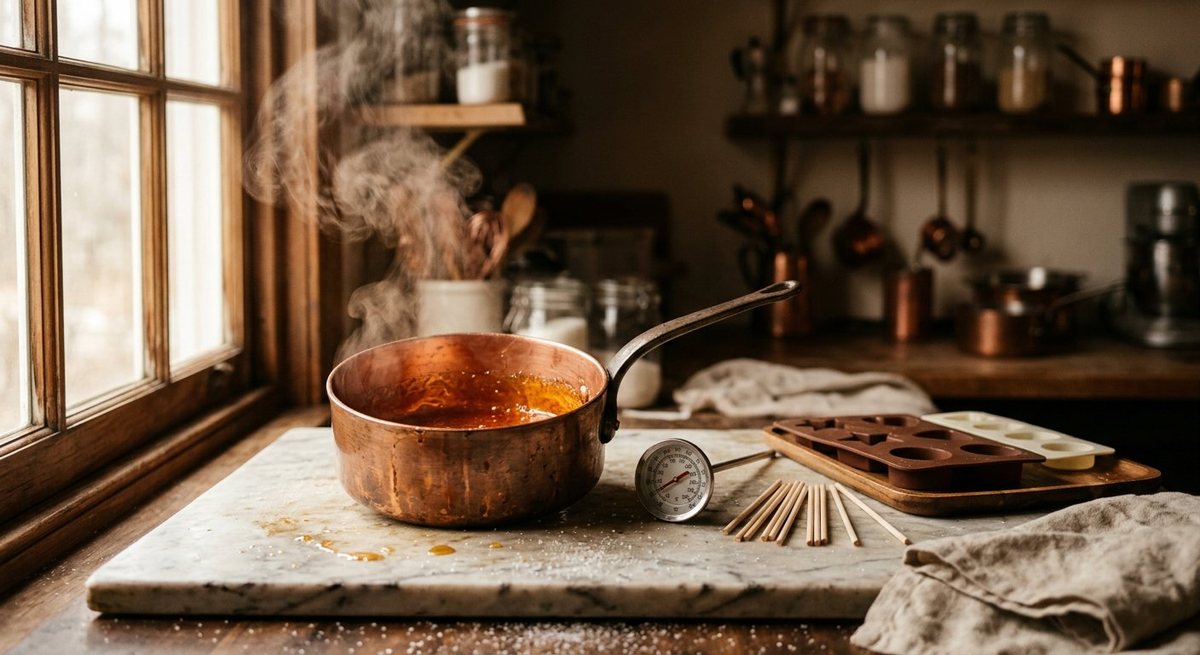
In our studio that means four concrete things. Batches are cooked in a copper pot rather than a continuous line, so the syrup is stirred and watched by hand. Flavors come from ingredients you could buy at a market — fruit, honey, dried flowers, spices, tea — rather than a single compound. Color is a by-product of those ingredients instead of a dye. And because nothing is standardized to a color chip, two batches of lavender lemon are allowed to look slightly different.
The trade-off is honest: hand-poured candy varies, and variation is the point. What does not vary is the recipe discipline. A lollipop is roughly 96–98% sugar by weight, so every other ingredient has to earn its place in the remaining percent.
A quick reality check
Lollipops are a confection, not a supplement or a health product. We make no nutrition, medical or dietary claims, and we recommend treats in moderation — especially for children. What we can promise is careful cooking, a full ingredient list on every wrapper, and a clear price before you order.
How a unique flavor is built
A flavor is not one ingredient; it is a sequence. Sugar carries aroma poorly at high heat, so most of the character in a good lollipop is added at the end of cooking or layered during cooling. We build every recipe in five passes.
Base
Cane sugar and glucose syrup set the body and the hardness. Honey, maple or invert sugar softens the snap and adds a darker, rounder middle note.
Aroma layer
Fruit reductions, tea infusions and botanical tinctures go in below 135 °C (275 °F), where delicate volatile aromas survive instead of cooking off.
Acidity
A measured amount of citric or malic acid lifts fruit flavors so they read as fresh rather than flat. Too much and the candy turns sour and sticky.
Texture
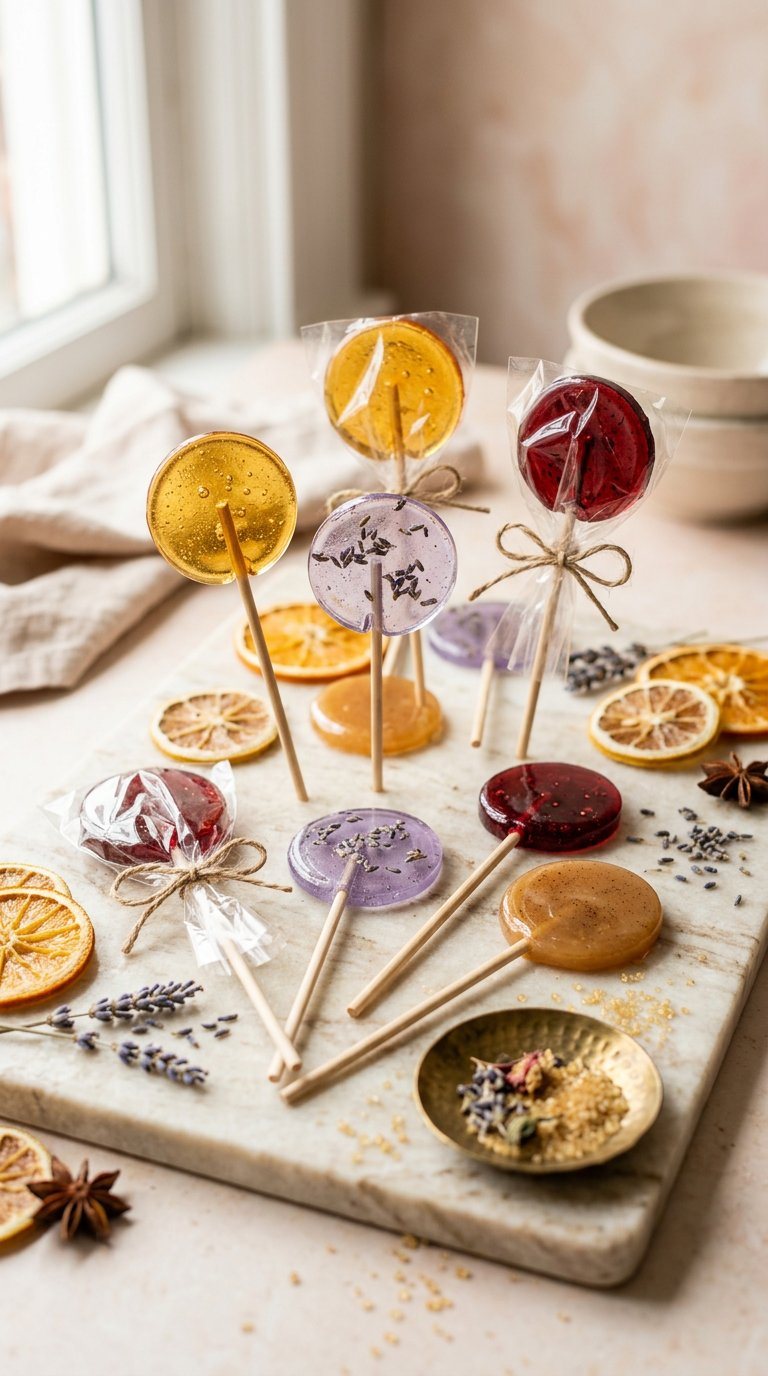
Finely ground spices, seeds or petals either suspend in the candy for a speckled look or sit on the surface for a first impression that changes as you eat.
Finish
A last pinch of salt or a whisper of vanilla smooths the edges. This is the layer most people notice without being able to name it.
| Flavor family | Base note | Aroma layer | Finishing touch |
|---|---|---|---|
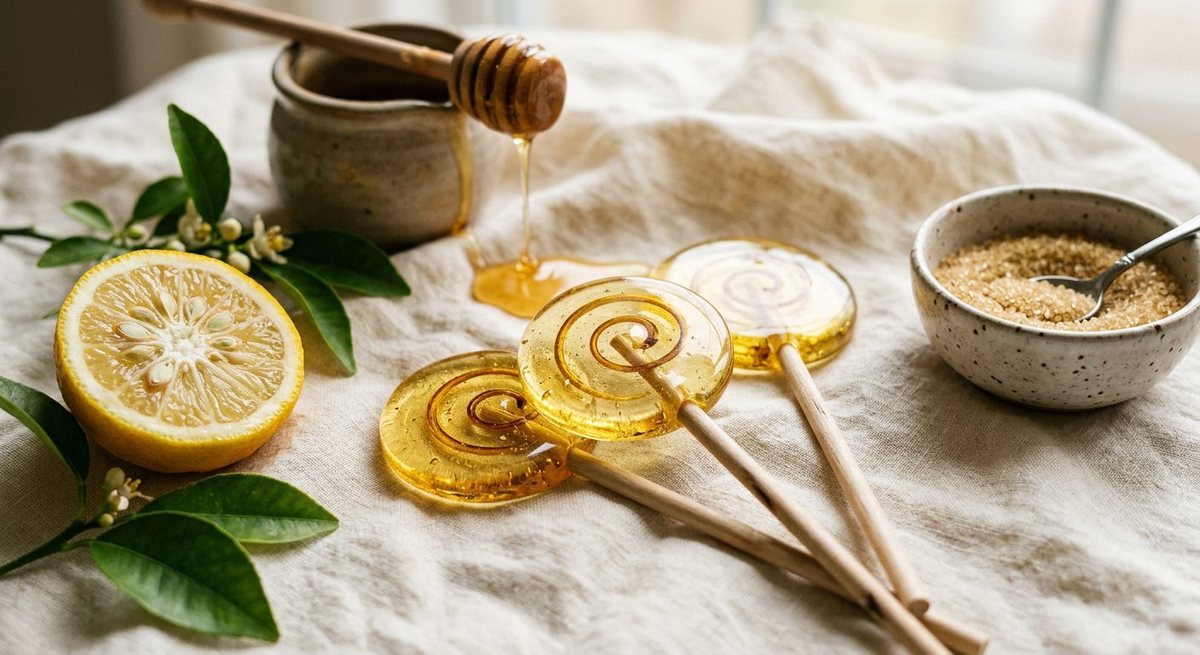
| Citrus | Pale cane sugar | Cold-pressed peel and juice | Sea salt, citric acid |
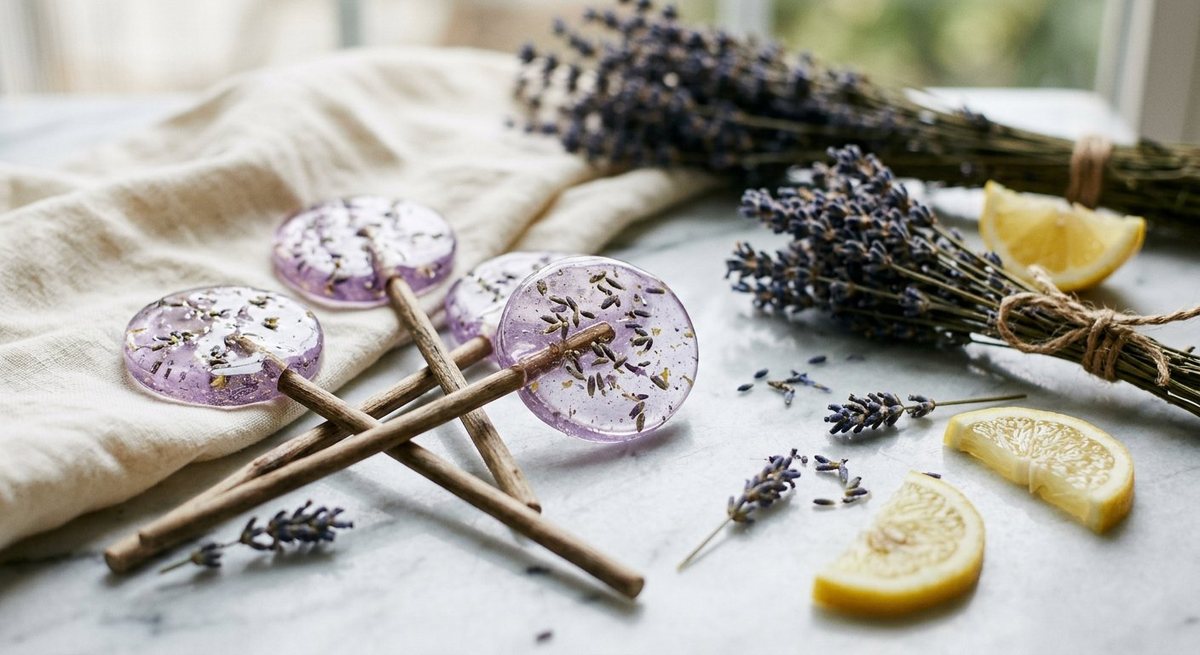
| Floral | Honey-glucose | Dried lavender, elderflower, rose | Lemon zest, vanilla |
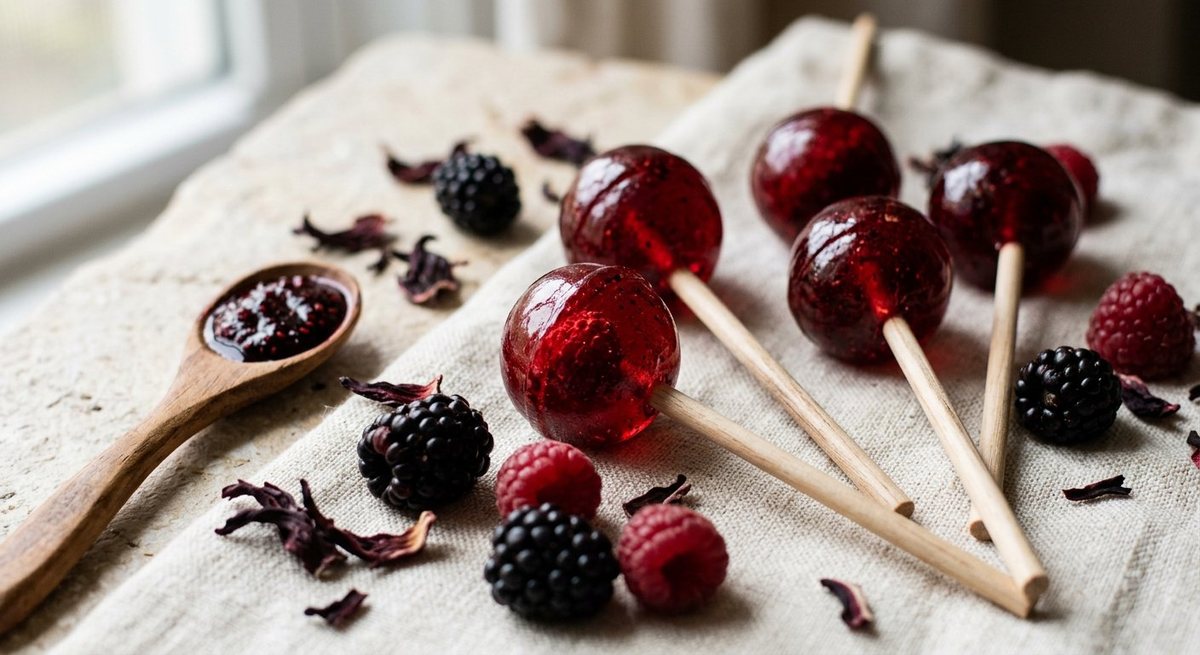
| Berry | Dark cane sugar | Reduced berries, hibiscus | Malic acid, black pepper |
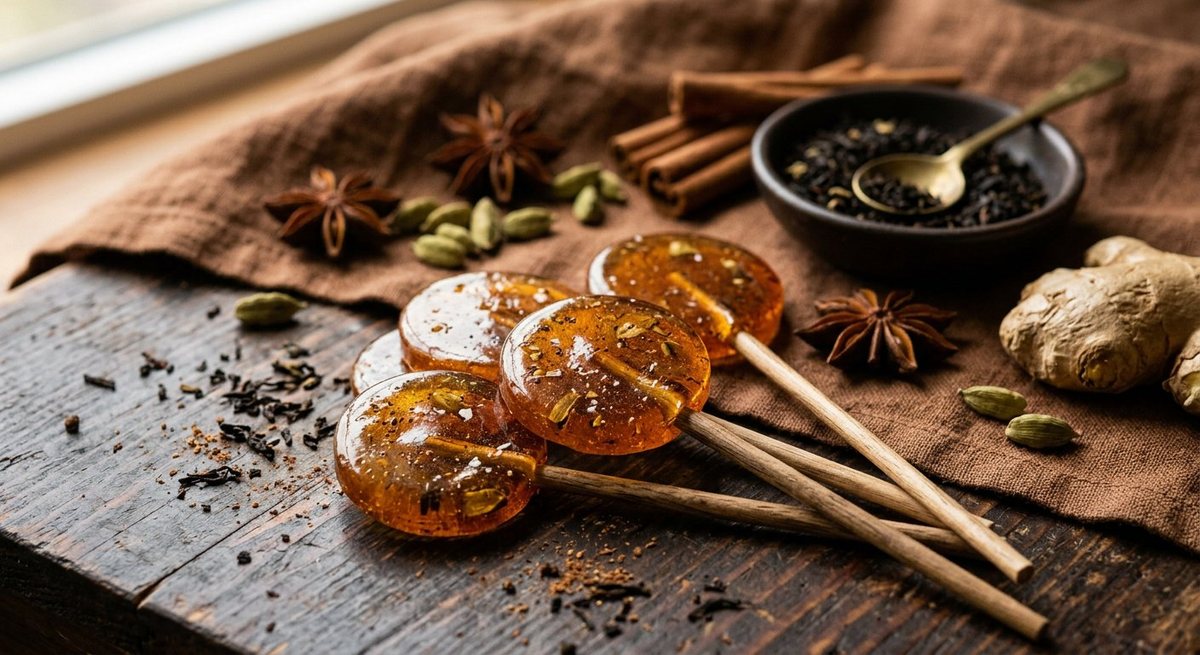
| Spice | Caramelized sugar | Steeped chai, cardamom, ginger | Toasted milk powder, salt |
| Orchard | Honey-glucose | Pear and apple reduction | Vanilla bean, brown butter note |
“A good lollipop should be finished before you have decided whether you liked it — and then make you want a second one for research purposes.”
— The Sugar Spindle kitchen notebook
Cooking: the four-minute window
Hard candy is a game of temperature. Water boils out of the syrup, sugar concentration climbs, and somewhere above 149 °C (300 °F) the candy reaches the “hard crack” stage: glassy, brittle, and unforgiving. Miss the window by a minute and the lollipop turns tacky in the wrapper. Push it too far and the sugar begins to caramelize or scorch, which is why dark flavors like cardamom chai are easier to cook than pale citrus ones.
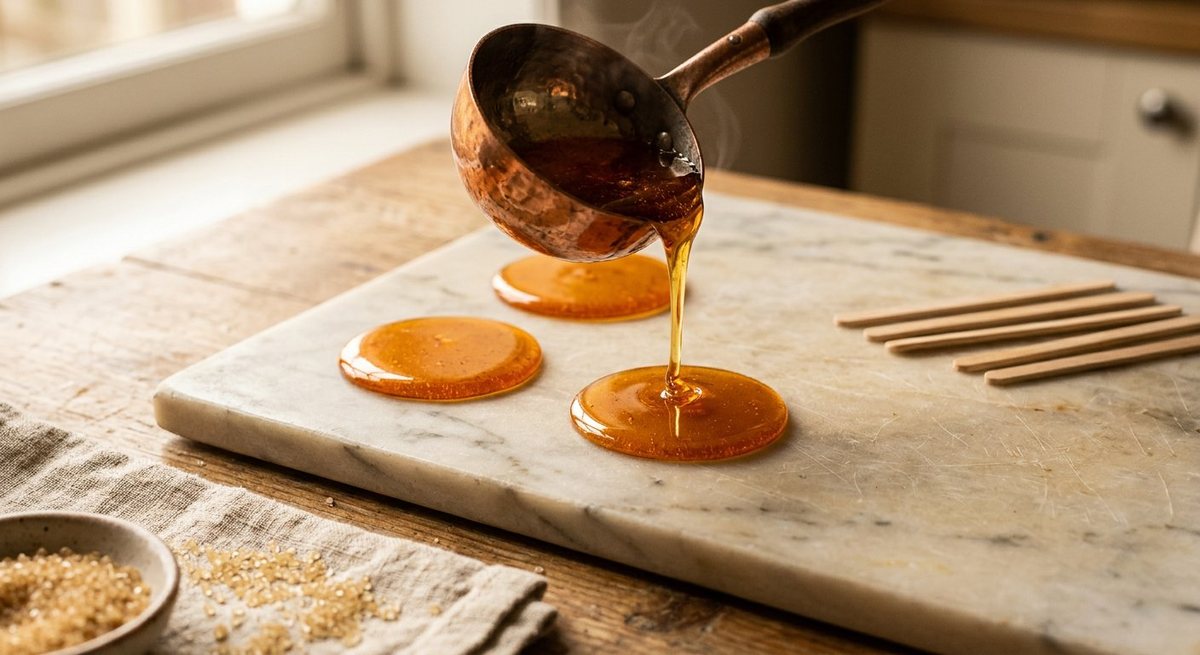
Once poured, the candy rests for roughly twelve minutes until it is cool enough to handle but still flexible. That is when the sticks go in and the shape is set. Hand-poured discs are never perfectly round, and the small differences in thickness are useful: the thinner edge melts first and releases aroma quickly, while the thicker center keeps the flavor going.
We pour on marble because it holds temperature evenly and does not react with acid. Between batches the slab is scraped, washed and dried — candy sugar is sticky enough that a single careless batch can flavor the next one.
Sourcing and what is on the wrapper
The shortest ingredient list is usually the most transparent one. Our standard lollipop carries six to eight ingredients: cane sugar, glucose syrup, water, the flavor ingredients that define it, and a small amount of citric or malic acid. That is the whole recipe.
What goes in
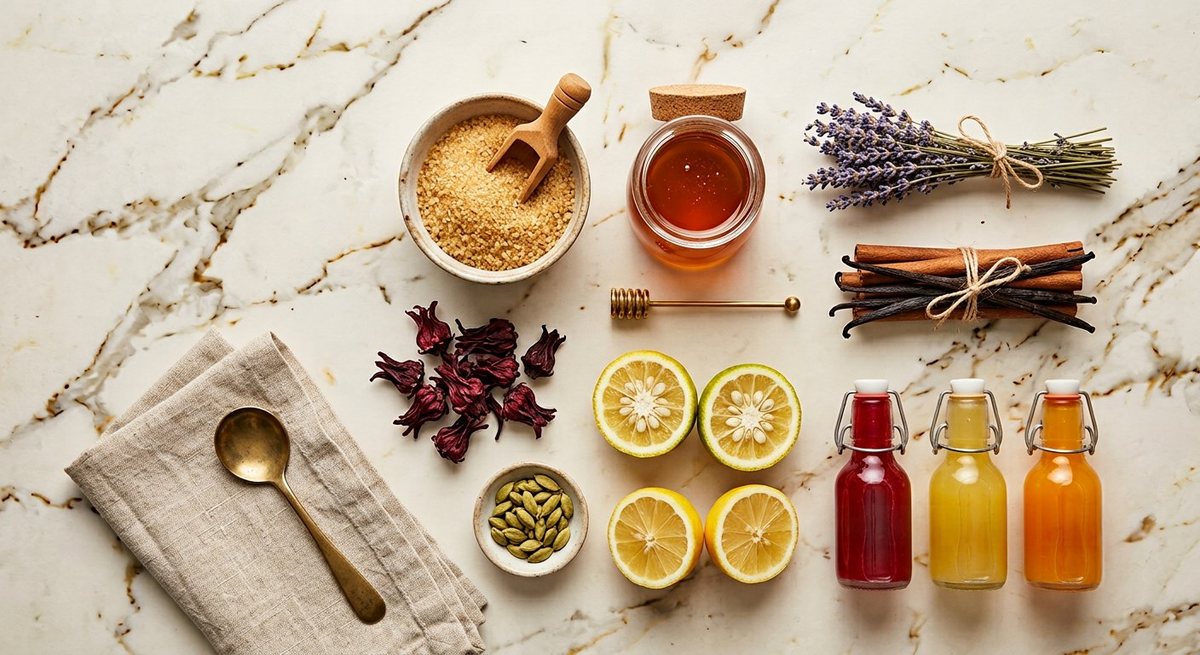
- Cane sugar and glucose syrup
- Wildflower honey and invert sugar
- Cold-pressed citrus and fruit reductions
- Whole spices, dried botanicals and tea
- Citric or malic acid in measured amounts
- Sea salt and real vanilla
What stays out
- Artificial colors and dyes
- High-intensity sweeteners
- Preservatives
- Cheap “flavor blends” standing in for fruit
- Unlisted fillers
Allergen note: we cook in a small kitchen that also handles dairy, wheat and tree nuts. We cannot describe any product as allergen-free. If you have a specific allergy, email us before ordering and we will tell you exactly what the batch touched.
How to taste hard candy
Hard candy releases flavor in stages, and most of that happens before you swallow. Slowing down for a minute changes what you notice.
- Look first. A clear, glossy surface means the syrup was cooked cleanly. Cloudiness or sticky patches suggest moisture got in.
- Smell the wrapper side. The aromatic top notes — citrus peel, lavender — are volatile and show up on the nose before the first taste.
- Let it rest on the tongue. Do not crunch. The first thirty seconds are the aroma layer; the middle is the base sugar and acid.
- Notice the finish. Spice and salt arrive last and linger. A clean finish that fades is a sign the acid level was balanced.
- Pair it. Citrus lollipops suit green tea, spice lollipops suit black coffee, berry lollipops suit sparkling water with lime.
Storing, shipping and sharing
Hard candy is shelf-stable but sensitive to moisture and heat. Keep lollipops in their wrappers, in a sealed tin or jar, somewhere below 24 °C (75 °F) and away from steam — a kitchen shelf above the kettle is the worst possible home. In those conditions they hold their texture for around nine months. Refrigeration is not recommended: condensation forms when the candy comes back to room temperature and turns the surface sticky.
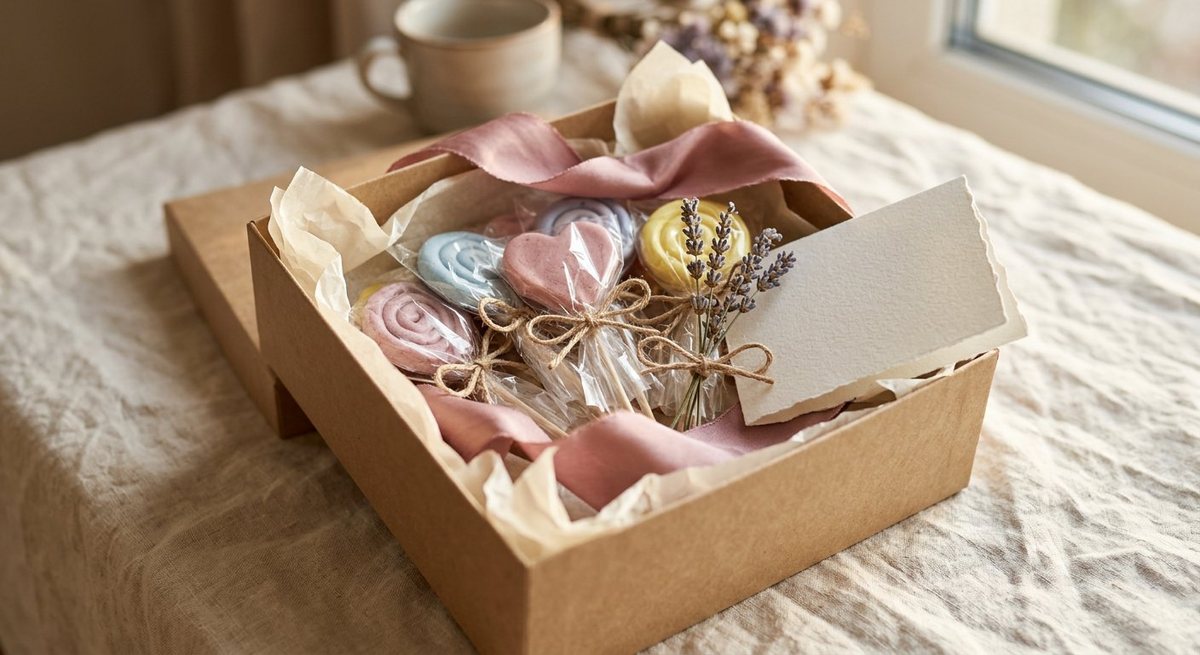
For shipping, we wrap each lollipop in food-safe cellophane, tie it with cotton twine and cushion the box with tissue. Orders leave the studio within two business days, and warm-weather shipments include an insulating layer so the candy does not soften in transit.
Safety: hard candy on a stick is a choking hazard. Not suitable for children under three. Please supervise younger children and remove the stick before the candy becomes small enough to swallow whole.